
Content navigation
High frequency crystals from the Himalayas
The crystals produced in and near the Himalayas have very evolved vibrations. Robert Simmons also introduced some Himalayan white crystal pillars from Nepal last year. His description of the feelings also mentioned their enlightenment and high light-bearing feeling (we sell For Himalayan crystals, we obtain them ourselves from intermediate miners in the mining area. Because Robert is located in the United States, the price he set is very high, and we have geographical convenience in obtaining Himalayan crystals, which can reduce some costs).
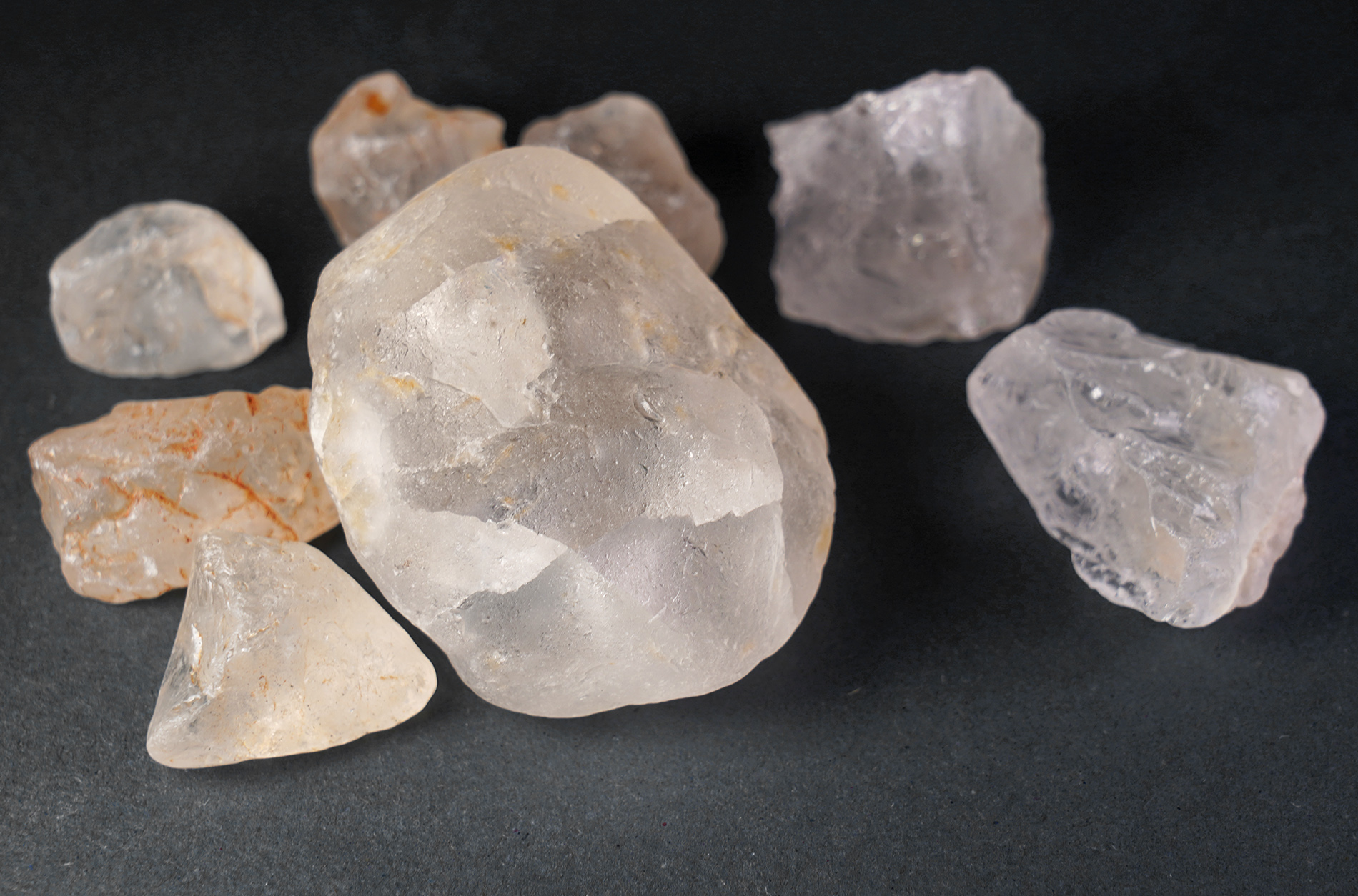
Himalayan crystal is mainly produced in Pakistan, India, Tibet and Nepal, which essentially covers the entire region spanning the Himalayan mountain range on the map. The Himalayan crystal from each of these areas has its own characteristics. India has recently focused on mass production of highly clear, ice-like specimens, with some pieces bearing anatase on the surface, or intergrown with black silver titanium, rutile, or chlorite (commonly known as green phantom). Pakistan, like Nepal, also produces highly clear, ice-like specimens at higher altitudes, though in smaller quantities, and Nepal frequently yields tea-coloured Himalayan crystal as well.
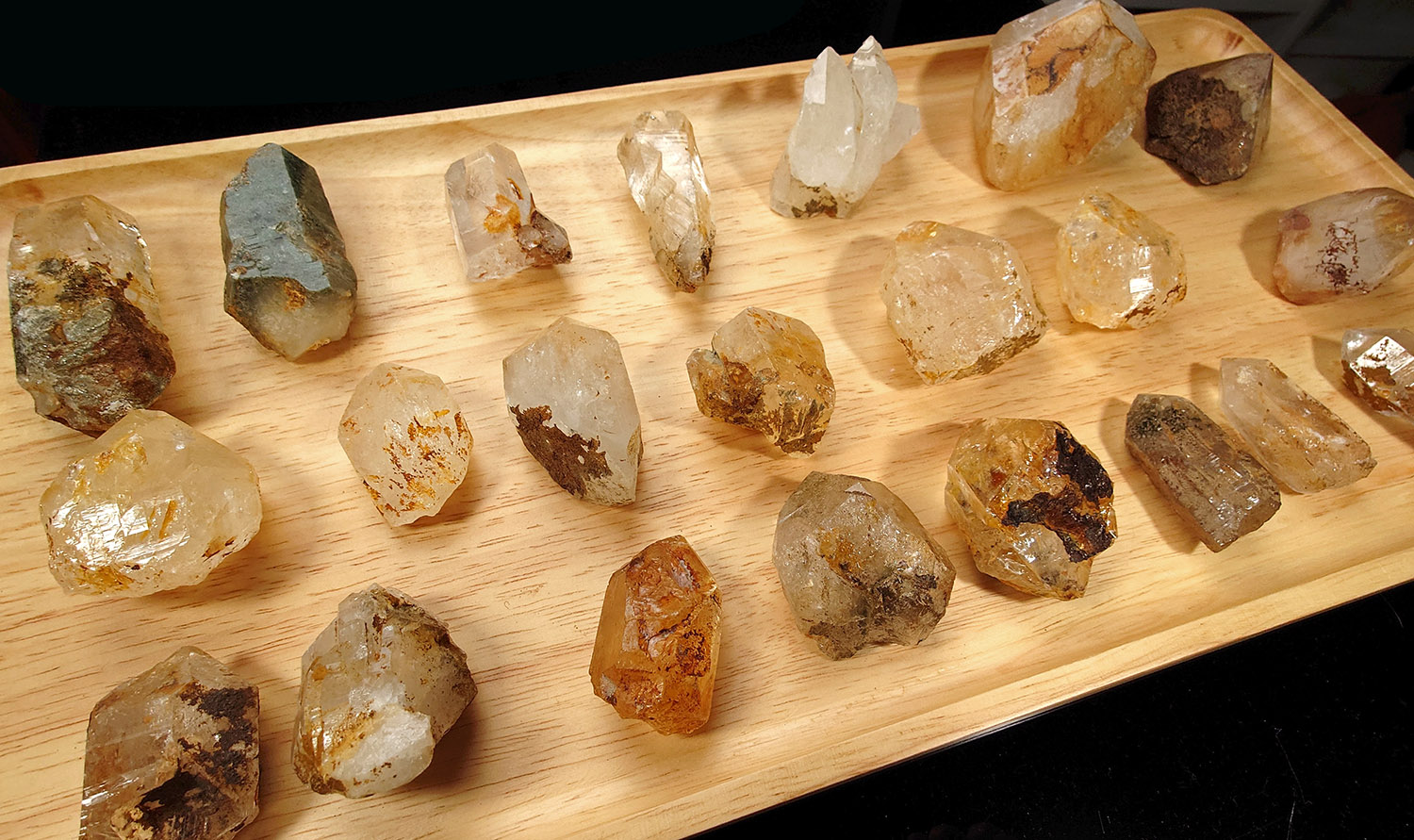
Tibet is the most unique. The Himalayan crystals here vibrate at a very ancient high frequency. Most of them are not pure and have mineral damage. Some are full of yellow cortex. Although they are not favored by the mainstream market, you can feel the energy. People, regardless of appearance constraints, can feel that they are humming an ancient frequency that is very difficult to resist.
In principle, the Himalayan crystals from these regions, as mentioned above, also occur in symbiosis to varying degrees with other minerals such as anatase, black silver rutile, rutile and chlorite. Regardless, they invariably come in differing degrees of clarity and quality, and the above merely serves as a reference reflecting the current state of the majority of the market.
PS. Rutile, the crystals are mostly columnar or needle-shaped, and a few are cone-shaped or equiaxed. There are often growth stripes parallel to the long axis on the surface of columnar crystals, while needle-shaped crystals are often wrapped in transparent crystals, commonly known as hair crystals. The main component is titanium dioxide, and often contains small amounts of iron, niobium and other ingredients. In nature, those with pure quality are transparent and colorless. If they contain impurities, they will show other colors. Among them, dark red or brown red are the most common, and yellow or black are quite rare (later, the black silver titanium on the crystal market was also found to contain iron. Rutile, maybe this is rare?). There are three main polymorphs of titanium dioxide, namely rutile, brookite and anatase. Rutile is widely distributed, while brookite and anatase are relatively rare.
The higher the altitude in the Himalayas, the more likely it is that the Himalayan crystals produced will have high transparency and high brightness, because this extremely transparent body requires purer water quality and environment, and high altitudes provide such an environment. Because it is more difficult to mine at high altitudes, Himalayan crystals of this quality are very expensive and are said to be among the collections of professional buyers around the world.
In addition to the higher-altitude, ice-clear quality, certain elevations and regions yield crystals with a greater variety of co-existing minerals, such as the previously mentioned anatase, black silver titanium, rutile and chlorite, or those intergrown with iron-bearing minerals, producing gold-skinned Himalayan crystals — a type that likewise vibrates at the frequency of the Golden Healer.
Himalayan Crystal Mining
In the production areas of Pakistan and India, due to the lack of faith, most crystals are mined by blasting mountains. However, in Tibet, when collecting Tibetan Himalayan crystals, my Chinese friend also received a "warning text message" from the Tibetans. ”, roughly speaking, because of Tibetan people’s thousands of years of Tibetan Buddhist belief, and China’s ban on large-scale mining with machinery, Tibetan Himalayan crystals are all knocked down by Tibetans with their bare hands and simple tools, because the Himalayas are Their holy mountain is sacred and inviolable. They all obtain Tibetan Himalayan crystals with a pious and grateful heart, so they also urge us to own and sell them with the same cherished heart. Although I am not sure about the situation in Nepal, But I believe that with the same level of religious piety in Nepal, it should not be far from the situation in Tibet.
Since Himalayan crystals in Tibet cannot be mined by blasting mountains, it is conceivable that most of the crystals that can be obtained manually are crystal mines that grow on the surface of mountains. Therefore, you will find that Tibetan crystals have many symbiotic rocks or golden colors. There are even many defects in the cortex. This is related to the location and method of mining, but I think this is a way that respects nature and the Himalayas more. It is quite worthy of respect. Even if most of them are not clean in appearance, their frequency is still very high. A noble and quite unique piece of Himalayan crystal.
Of course, Tibetan Himalayan crystals will also be clear and transparent in high-altitude areas. The clear transparency seen so far is not as high as in other production areas, but because of what I just mentioned, this is not a crystal that explodes inside the mountain, but is on the surface of the mountain. The crystals obtained, in other words, I think there are definitely crystals with extremely high purity in the Tibetan Himalayas, but most of them are left in the mountains at high altitudes, and they continue to protect the entire holy mountain of Tibetan Buddhism, which is also a kind of beauty. of karma.
In addition, most Himalayan crystals obtained from Tibet are usually not pickled, so they retain more of the appearance of a rocky loess symbiotic surface.
Characteristic identification of Himalayan crystals
Because Himalayan quartz is a well-known variety, there have been cases of crystals from other origins being sold under its name to fetch a better price. The commonly accepted method of identification is to observe any facet of the crystal column for horizontal and vertical striations resembling a circuit board. This is a surface characteristic found on most Himalayan quartz, said to result from certain geological activities at high altitude that leave such intersecting striations on the facets of the crystal column.
Some crystals from non-Himalayan areas also have this characteristic of horizontal and vertical lines, and even some crystals from the Himalayan area, but the horizontal and vertical lines are not obvious. Therefore, the lines on the surface are only general rules and cannot be used as the only feature to identify the origin. Therefore, it is recommended to start from the visible ones. Obtain Himalayan crystals from trusted mining sources or manufacturers, and you will not get other crystals from non-Himalayan origins.
Tibetan Himalayan Crystal
Returning to the theme of this chapter, the Himalayan crystals in Tibet, in addition to the relationship between the collection area and the method, are less highly translucent (of course there are still some areas where more translucent ones can be collected), many of them are also golden yellow. The color is mainly due to their symbiotic relationship with iron-related minerals. Some of their golden yellow or orange-red color comes from the thin layer of iron oxide on the surface. Under appropriate lighting, some will show a beautiful colorful rainbow luster. This is true. Their different energy characteristics are added, giving most of them the qualities of golden healers.
Some specimens contain rutile inclusions and are commonly known as rutilated quartz (for information about rutile, whose main component is titanium dioxide, please refer to the PS. note in the previous paragraph; in addition, other minerals can also form rutilated quartz, but in this case it is identified as rutile based primarily on the information provided by the source mining area).
The Himalayan crystals in this area collectively hum a very ancient tune and frequency. Compared with the Himalayan crystals in other areas, this is a very unique difference. This is also related to the ancient snow mountain inheritance and Tibetan Buddhism where they grow. Holy places have an inseparable relationship and fate.
In addition to this ancient tune, they, like other crystals located in the Himalayas, vibrate a certain frequency of the Atlantis civilization, helping us to integrate the possibilities of a new transformation that we are now collectively moving towards.
Tibetan Himalayan crystals can quickly resonate with the area above the eyebrow chakra, and quickly reach agreement with our material body and energy level. We will feel that we are integrated with the crystals. I just meditated and felt that I was holding it in my hand. The crystals in it seemed to be non-existent and integrated into my body and energy field. The concepts they conveyed made me feel their very positive effects on our cellular level, helping us to readjust the uncoordinated original frequency. .
They are similar to the Pakistani Yellow mud bones, and in my experience, some were partners who worked alongside us during the Atlantis era, some were guardians upon the altars, and some were like crystal gemstones set into the pillars of the temples; yet I sense that the ancient frequency they chant carries an even more primordial energy, a strand of the energy that constitutes our very being, and our cells need this vibration to help us restore our Own original form.
In addition, the fact that they are produced in the holy land of Tibet also means that they are closely connected with all tantra traditions in this snow-capped mountain sanctuary. The ancient frequency they hum should also be part of this inheritance.
Holding the golden leather Tibetan Himalayan crystal in my hand, it quickly activated the energy field of the entire light body. The scope of action was around the subtle energy body closest to our senses. I felt a circular energy field. It quickly reached harmony with my energy field. In almost less than a minute, I felt that the surroundings calmed down, slowed down, and relaxed. I was surprised that this high-frequency crystal actually brought a calm and gentle feeling. .
Compared with the white Himalayan crystal, the effect of the golden Tibetan Himalayan crystal is not concentrated on the upper three chakras. It feels systemic and has powerful healing properties. Although it is systemic, its color also strengthens the targeting. For the resonance of the solar plexus, the white crystal acts on a more cellular level, while the golden one acts on the subtle body level of cells, closer to the non-material energy field. Overall, I feel that they can release many disharmonious energies. Energy helps our body and subtle body achieve a certain degree of harmonious balance.
Specific production areas of Tibetan crystals
As mentioned earlier, I contacted a Chinese mineral dealer I trust to find out more about where Tibetan crystals are sourced and to verify the matter of Kailash crystals.
Mount Kailash is located in Pulan County, Ngari Prefecture, Tibet, and is the second-highest peak in the Gangdisê Mountains. As for so-called Kailash crystals — similar to what we mentioned when introducing Brandberg phantom quartz — for the sake of market recognition, the most famous landmark in the surrounding area is sometimes used as a broad place-of-origin label for crystals. Therefore, anything sourced from the Ngari region may be marketed as Kailash crystals.
At the time, that friend said there was no current production in Ngari. However, since this friend had only entered the crystal market six years ago, I remained open to seeking other information. Later, after getting acquainted with a veteran who had been in the trade for over a decade, I learned thatKailashhad produced some crystals in the early days. To be more precise, it is the Gangdisê Mountains where Mount Kailash is located that produced some crystals in its early days. Since Kailash is a sacred peak that has long been forbidden to climb — let alone mine — to be accurate, it was the Gangdisê Mountains, and reportedly there was only one mineral vein, which was banned from extraction a very long time ago. From here on, I will refer to crystals produced from the Gangdisê Mountains long ago as Kailash crystals, while recent Tibetan crystals from the Ngari region not mined from this mountain range will be called Ngari Tibetan crystals, as a more precise distinction.
It should be noted that among Tibetan crystals, those from the Himalayan mountain region are called Tibetan Himalayan crystals, and those from the Gangdisê Mountains are called Tibetan Kailash crystals. However, some people still call them all Himalayan crystals, possibly out of unfamiliarity with the mountain ranges. This is not meant to argue about correctness — after all, these ranges are all nearby and the names are human-made — but simply to clarify the actual names of these mountain ranges so they can be easily identified on a map and geographical confusion can be avoided.
This veteran is actually quite a remarkable woman who can sense crystal energy and has collected many vintage minerals. Her shop closed down years ago, but she still has a massive stockpile of mineral specimens. I first noticed some of her crystal strands, which had incredibly powerful energy, and we hit it off immediately, chatting endlessly. It was only later that I found out the strands I was drawn to were respectively old-stock Tibetan Himalayan crystals and Kailash crystals, which gave me the opportunity to ask about the authenticity and history of the Kailash origin.
In addition, the earliest batch of Tibetan Himalayan crystals on our website were from the very first excavation of Tibetan crystals, in Shannan City. The veteran mentioned that the early mining area has since collapsed and been banned. Recently, there are still crystals newly excavated from Shannan on the market, which are said to possibly come from other veins in the Tibetan region, including Shigatse and Ngari.
One thing worth noting: according to various veterans in the field, the entire Ali and Shannan regions — and I suspect all of Tibet — are officially banned from mining at present.
The early Tibetan crystals from Shannan were from the first excavation, so the pieces at the time were of very high quality with excellent energy. But once they hit the market and became popular, it was human nature to seek out and mine every vein possible. These past two years I have been lucky, often coming across Tibetan crystals that were excavated back then but never sold. The new production is not bad — it is simply that I have found my own resonance with the old-stock Tibetan crystals from back then is very strong, perhaps because of deep karmic ties. So whenever I encounter them, I almost always resonate strongly. A few newer pieces also resonate strongly, so as we always advise, trust your intuition and let your connections guide you.
In accordance with karmic connections, I will continue to bring back these long-ago-excavated Tibetan Himalayan crystals and Kailash crystals to share, as the opportunity arises.
Q&A: 禁採那為什麼現在還有新採集的呢?藏晶都是人工去採集的,自己帶個工具敲敲打打,通常都是採露在表面看得到的,如前面某個段落中分享的,因為藏民他們尊重自己的山脈,那是他們的聖山。人工採集雖然嚴格上來說違反了禁採規定,但諾大的藏區,整個喜馬拉雅山脈岡底斯山脈的延伸的附近偌大的土地上其實都有水晶,只要依循著礦脈去探索都可以人工採集。
Because of the vast terrain and the absence of large-scale means such as machinery or blasting, it is difficult for the authorities to detect such activity. At present, this is a very common method of collection across the Tibetan regions, and every so often several tonnes of Tibetan crystals will surface. Of course, beyond the prohibition itself, there is also the fact that Tibet is locally endowed with rich mineral deposits of various kinds, including substantial strategic reserves, so the ban reflects considerations of national resources, politics, defence and the economy. PS. For sites that lean more towards mine shafts or fixed areas that were once exploited in earlier times and have since been prohibited, it is said that the authorities do send patrols to inspect them.
Extra: How to Meet Your Tibetan Himalayan Crystal
If we want to meet the crystal minerals that are truly destined for us, we must cultivate and put aside the human-defined concepts of "beauty, transparency, crystal integrity, etc." Only then can we sincerely feel the energy they truly convey without It will be affected and filtered by our thinking and belief system, so that we can more accurately and efficiently meet old friends who are truly destined for you and can support you. There are many very masters and elder-level crystals that are now incomplete or inconsistent in appearance. From the secular point of view, this is a protective mechanism for them, allowing those who only focus on appearance and collection value to bypass them, so that they have a better chance of meeting the people they really want to serve. Of course, this also has a price aspect. Considering that the price of high-quality crystals with collectible value is usually very high, master-level crystals will be incarnated in a suitable appearance according to the capabilities of their service recipients, in a way that meets the payment requirements of the service recipients.
This is not to say that you can’t choose high-quality and high-priced crystals, no, but you have to put all this aside and feel it with your heart. Your exclusive crystals will appear one after another, and I believe they will all be affordable to you. price appears.

 EN
EN  TW
TW  KOR
KOR  JP
JP  IT
IT  FR
FR  ES
ES  PT
PT  DE
DE